Regulated Product Stewardship for Textiles in Aotearoa New Zealand

Regulated Product Stewardship for Textiles in Aotearoa New Zealand

New research: Regulated textile product stewardship in Aotearoa could add $602 million to the economy

Imagine a thriving textile and fashion sector in Aotearoa New Zealand where a level playing field exists for all businesses, affordable clothing remains accessible for everyone, and circular economy design practices create more jobs.

New research by Eunomia Regulated Product Stewardship for Textiles in Aotearoa New Zealand, a cost benefit analysis (CBA), that was commissioned by the Textile Advisory Group with funding from Clare Foundation, shows this future is not only possible but economically beneficial. Regulated product stewardship (RPS) is the foundation of a resilient, fair and thriving textile industry in Aotearoa New Zealand, says Textile Advisory Group spokesperson Bernadette Casey. “RPS supports a stable textile industry in Aotearoa New Zealand and this is especially important in times of uncertainty” Casey says. “We now have research that shows the economics of RPS not only stack up but could bring significant benefits to Aotearoa New Zealand.”

The report outlines two regulated product stewardship pathways, a modest and a high‑ambition option. It estimates a net benefit of $98m over ten years under the modest scenario, increasing to $602m under the more ambitious approach. Both options would also deliver significant environmental and social benefits for the sector and Aotearoa New Zealand.

RPS for textiles would generate funding for research and circular design, infrastructure and systems for reuse and recycling, and consumer education campaigns. A high ambition scheme would go further with kerbside textile collection, digital product passports, and would result in significantly higher reuse and recycling.

Key findings include:

● A $98 million net benefit under the modest RPS scenario and a $602 million net benefit for the high ambition scenario.
● Employment could grow by up to 6% by 2038. With opportunities across repair, reuse, recycling, research and innovation, and consumer engagement.
● Currently, 78% of textiles end up in landfill (107,000 tonnes/year), with just 6% reused or recycled in New Zealand.
● Under a high ambition RPS scheme, landfill could fall to just 4% by 2038, with a 23% reduction in consumption, and 86% of what is bought, reused or recycled.
● For regular (mid-price) fashion items, price would increase by 1.8% on a modest ambition scenario and 2.9% for high ambition RPS.
● For super fast-fashion, the retail price would increase 7% and 11% under the different scenarios (for a $25 top this would be a $1.80 or $2.90 increase respectively). Properly funded reuse (e.g. hire/lease) and repair initiatives, meanwhile, would improve access to good quality clothing.
● Carbon emissions could be reduced by up to 10.8 million tonnes by 2038, with carbon reduction benefits valued at $900 million under the low ambition scenario and $1.6 billion under the high ambition.

A well‑designed RPS would introduce compliance and funding obligations for producers, with most costs falling on low‑quality imports. However, the research shows the overall benefits outweigh these costs by reducing pressure on local councils’ waste systems, increasing the value of recycled materials, and creating new revenue streams for New Zealand businesses.

Eco‑modulated incentives are a key part of RPS and reward producers for improving durability, repairability and recyclability. Incentivising better product design encourages investment in durable and repairable textiles, as well as in reuse.
Consumers, while potentially paying a little more up front, would benefit from higher quality products that deliver better value for money over time.

RPS is the foundation for a strong local textile industry where businesses compete on quality rather than volume; and responsible production supports investment in innovation, textile recycling and circular business models, resulting in increased value for all.

Find the report here.

Resource Use and Waste Generation in Aotearoa

Resource Use and Waste Generation in Aotearoa

In May 2025, Parliamentary Commissioner for the Environment (PCE) published the research note ‘Resource use and waste generation in Aotearoa New Zealand: filling (some) gaps’ to contribute to the investigation they’re carrying out on the impacts economic production and consumption impart on the environment. The investigation seeks to gather information about whether continued population and economic growth can be sustainable with finite natural resources and absorptive capacity for waste and pollutants. The research note summarises five pieces of external research commissioned by PCE to fill in data gaps identified in their literature review that centred around resource use and waste generation in New Zealand.

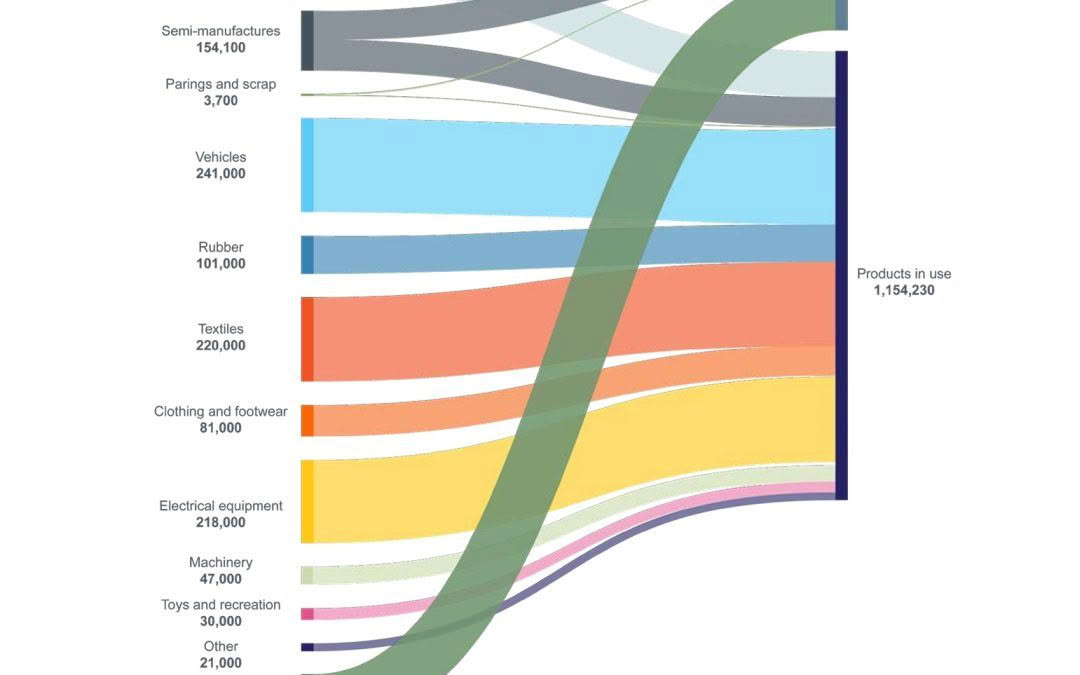
One of the external research pieces, ‘The plastic content of manufactured imports’  was undertaken by Eunomia Research & Consulting alongside Whirika Consulting. This research focussed on quantifying New Zealand’s plastic problem and mapping the flows of plastic. Two key findings identified in the research note are outlined below:
Key finding #1:  There is far more plastic in complex products than in packaging.
Key finding #2:  The largest components of New Zealand’s plastic use – vehicles and textiles – are also key sources of microplastics.

Click here to find out more about PCE’s investigation into resource use and waste generation, and to read a summary of our report on page 48.

“Measuring the amount and types of plastic we use and discard is a prerequisite for appropriate management and monitoring – it is a vital step in allowing us to make evidence-informed decisions around where we direct resources to improve our use and management of plastic, and to track their effectiveness.” – Professor Dame Juliet Gerrard (previous Prime Minister’s Chief Science Advisor)

Invisible Waste: Unveiling Microplastic Pollution

Invisible Waste: Unveiling Microplastic Pollution

Consultant Anita Lewis presented a webinar hosted by WasteMINZ on the 9th October 2024. Titled ‘Invisible Waste: Unveiling Microplastic Pollution’, Anita discusses the pervasive issue of microplastics. Focusing on its sources, environmental impacts, and the role of the waste management sector in mitigation and management.

Anita highlights the significant contribution of microplastics from textiles, the far-reaching consequences for ecosystems and human health, and the ability of microplastics to spread across the globe, including remote locations like Antarctica.

Anita discusses solutions including improving wastewater treatment technologies, policy changes, and shifting to the circular economy for textiles and plastics in particular. Other ways to reduce microplastic pollution include increasing industry accountability and public awareness.

Organic Waste Collection and Processing Guidance

Organic Waste Collection and Processing Guidance

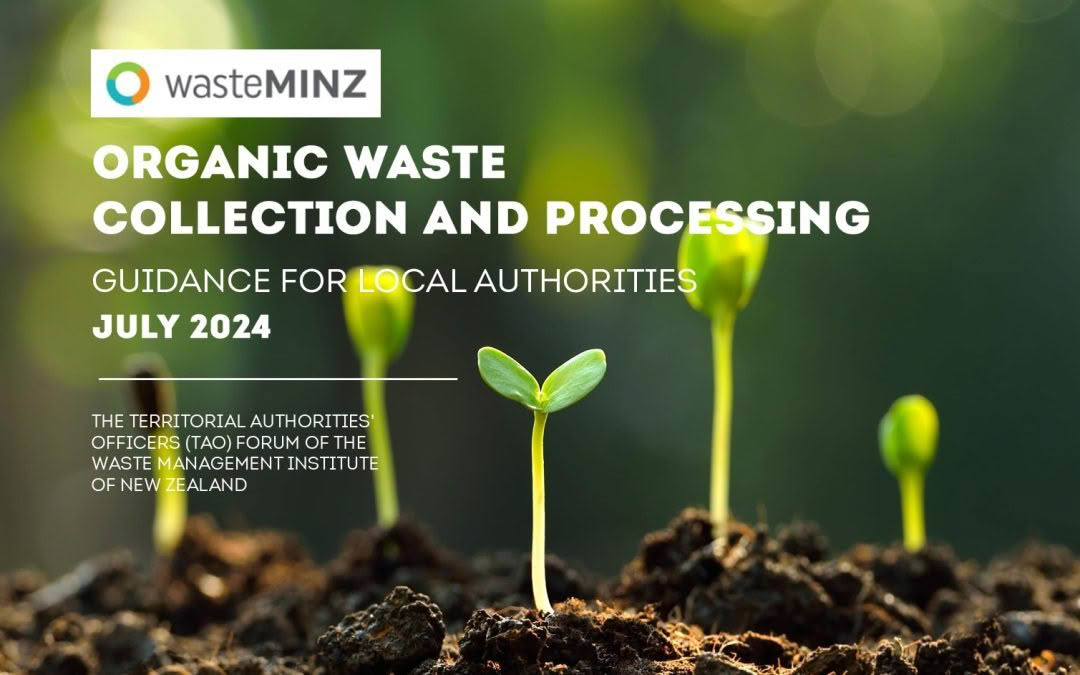
WasteMINZ have recently published the Organic Waste Collection and Processing Guidance for Local Authorities that was produced by Eunomia with support from Waste Not Consulting and Sunshine Yates Consulting, with funding and support from the WasteMINZ Territorial Authority Officers (TAO) forum.

The guide takes a deep dive into what makes a kerbside organics service successful, providing evidence from local and international case studies of high-performing services, to help councils determine how to design and run a service that best serves their unique communities.

The guide provides a step-by-step framework all the way from planning to operating a kerbside organics service. It takes the user through the journey from understanding the needs of their region and communities, collection and processing options, how to procure the different aspects of the service, and how to implement and monitor the service for on-going success.

Waste to Energy Technology Implications in Aotearoa

Waste to Energy Technology Implications in Aotearoa

In September 2024 Eunomia produced a report for Waikato Regional and Tauranga City Councils that seeks to understand what place waste to energy has in Aotearoa.

The report presents outcomes on key waste to energy technologies and their potential application in New Zealand, and Waikato and Tauranga specifically. The study compares greenhouse gas emissions of four scenarios where three use WtE technologies and one uses landfill as the status quo.

Contaminants in Organic Waste: Recommendations Report

Contaminants in Organic Waste: Recommendations Report

In February 2024 Eunomia, alongside Whetū Consulting Group and Massey University, published a report for the Ministry for the Environment with recommendations to reduce contaminants in organic waste. The report provides 35 holistic recommendations to improve the quality of organic waste at both household and industry levels.

The report aims to understand and address challenges posed by contaminants in organic waste material streams. Contaminants in organic material pose risks to soil, human, and animal health and limit the end markets for processed organic material.

For further information contact info@eunomia.co.nz