by Admin EunomiaNZ | 8 Jun 2026 | Disposal, Policy, Policy & Strategy, Recent, Reports, Strategy, Sustainability
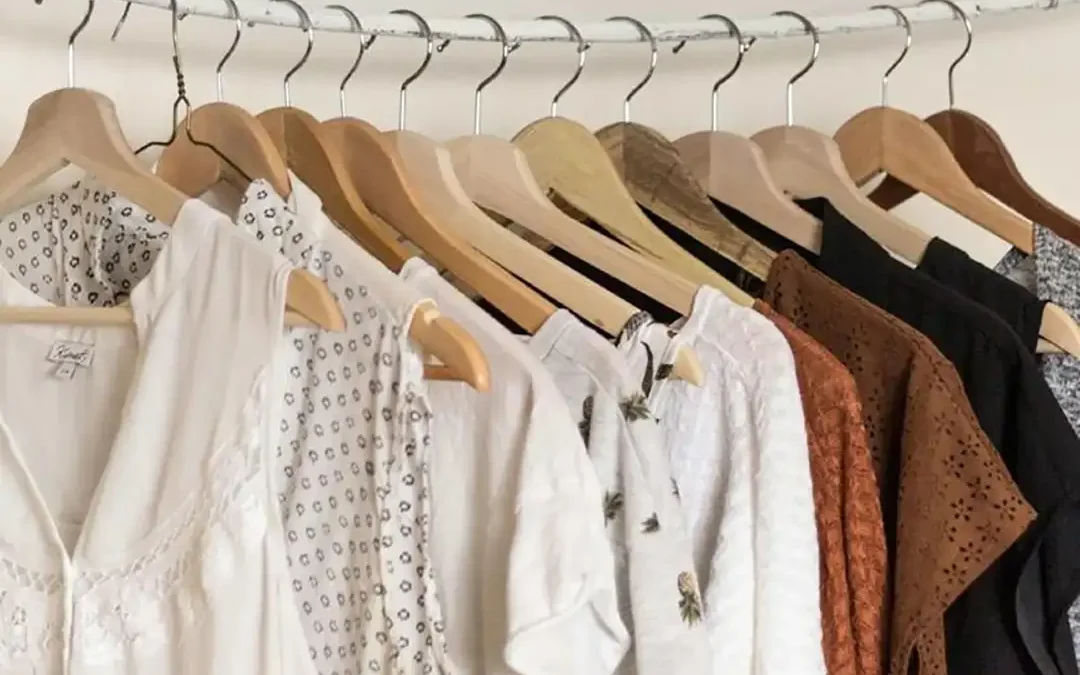
New research: Regulated textile product stewardship in Aotearoa could add $602 million to the economy
Imagine a thriving textile and fashion sector in Aotearoa New Zealand where a level playing field exists for all businesses, affordable clothing remains accessible for everyone, and circular economy design practices create more jobs.
New research by Eunomia Regulated Product Stewardship for Textiles in Aotearoa New Zealand, a cost benefit analysis (CBA), that was commissioned by the Textile Advisory Group with funding from Clare Foundation, shows this future is not only possible but economically beneficial. Regulated product stewardship (RPS) is the foundation of a resilient, fair and thriving textile industry in Aotearoa New Zealand, says Textile Advisory Group spokesperson Bernadette Casey. “RPS supports a stable textile industry in Aotearoa New Zealand and this is especially important in times of uncertainty” Casey says. “We now have research that shows the economics of RPS not only stack up but could bring significant benefits to Aotearoa New Zealand.”
The report outlines two regulated product stewardship pathways, a modest and a high‑ambition option. It estimates a net benefit of $98m over ten years under the modest scenario, increasing to $602m under the more ambitious approach. Both options would also deliver significant environmental and social benefits for the sector and Aotearoa New Zealand.
RPS for textiles would generate funding for research and circular design, infrastructure and systems for reuse and recycling, and consumer education campaigns. A high ambition scheme would go further with kerbside textile collection, digital product passports, and would result in significantly higher reuse and recycling.
Key findings include:
● A $98 million net benefit under the modest RPS scenario and a $602 million net benefit for the high ambition scenario.
● Employment could grow by up to 6% by 2038. With opportunities across repair, reuse, recycling, research and innovation, and consumer engagement.
● Currently, 78% of textiles end up in landfill (107,000 tonnes/year), with just 6% reused or recycled in New Zealand.
● Under a high ambition RPS scheme, landfill could fall to just 4% by 2038, with a 23% reduction in consumption, and 86% of what is bought, reused or recycled.
● For regular (mid-price) fashion items, price would increase by 1.8% on a modest ambition scenario and 2.9% for high ambition RPS.
● For super fast-fashion, the retail price would increase 7% and 11% under the different scenarios (for a $25 top this would be a $1.80 or $2.90 increase respectively). Properly funded reuse (e.g. hire/lease) and repair initiatives, meanwhile, would improve access to good quality clothing.
● Carbon emissions could be reduced by up to 10.8 million tonnes by 2038, with carbon reduction benefits valued at $900 million under the low ambition scenario and $1.6 billion under the high ambition.
A well‑designed RPS would introduce compliance and funding obligations for producers, with most costs falling on low‑quality imports. However, the research shows the overall benefits outweigh these costs by reducing pressure on local councils’ waste systems, increasing the value of recycled materials, and creating new revenue streams for New Zealand businesses.
Eco‑modulated incentives are a key part of RPS and reward producers for improving durability, repairability and recyclability. Incentivising better product design encourages investment in durable and repairable textiles, as well as in reuse.
Consumers, while potentially paying a little more up front, would benefit from higher quality products that deliver better value for money over time.
RPS is the foundation for a strong local textile industry where businesses compete on quality rather than volume; and responsible production supports investment in innovation, textile recycling and circular business models, resulting in increased value for all.
Find the report here.

by Admin EunomiaNZ | 3 Jun 2025 | article, Marine, Plastics, Policy & Strategy, Presentation, Reports, Sustainability, Sustainable Business, Waste, Waste & Recycling
Consultant Anita Lewis presented a webinar hosted by WasteMINZ on the 9th October 2024. Titled ‘Invisible Waste: Unveiling Microplastic Pollution’, Anita discusses the pervasive issue of microplastics. Focusing on its sources, environmental impacts, and the role of the waste management sector in mitigation and management.
Anita highlights the significant contribution of microplastics from textiles, the far-reaching consequences for ecosystems and human health, and the ability of microplastics to spread across the globe, including remote locations like Antarctica.
Anita discusses solutions including improving wastewater treatment technologies, policy changes, and shifting to the circular economy for textiles and plastics in particular. Other ways to reduce microplastic pollution include increasing industry accountability and public awareness.
by Duncan Wilson | 4 Apr 2025 | article, Policy, Policy & Strategy, Reports, Waste, Waste & Recycling
The Ministry for the Environment commissioned Eunomia to produce a report about recycling rates that would assist them to determine how to calculate national recycling rates for Aotearoa New Zealand. Six metrics were put forward for the Ministry’s refinement and future use, including sets that are comparable to existing Australian, OECD, and EU metrics.
Typically national waste metrics include recycling rates presented as percentages of waste recovered compared to total waste generated, and per capita metrics for total waste generated presented as kilograms of municipal waste per person per annum. Although these calculations appear to be straightforward there are many variables including waste streams, activity sources, and destination types that could be included or excluded from the definition of municipal waste and therefore the calculation of the recycling rate. It is also important to consider what information is available and what may need to be estimated.
The report begins with a review of metrics from jurisdictions within Australia, European Union, United Kingdom, United States, as well as for the OECD and PacWaste Plus programme to analyse existing approaches and determine useful methods or lessons that could be adopted or adapted for New Zealand. The international review found that the data obtained appears to be incomplete or inconsistent, relying on significant data manipulation and estimates. Although all jurisdictions reported on “municipal solid waste”, the definition and scope varies between them. The report also reflected that this metric overlooks non-municipal waste streams that generate a significant amount of waste (e.g. construction and demolition and industrial waste) that could have a greater potential for diversion and/or reduction.
Next, the report reviewed the availability and quality of datasets from government, research, industry, and product stewardship sources that could be called upon to generate national recycling rate metrics. The analysis found that data should be improved overtime for accurate recycling rate metric calculations, and that there is a lack of on-going data for material recovery.
The report brings together learnings from the international metrics review and the national dataset review to explore metrics that could be used in New Zealand. This involved generating a dataset of the best available data to use alongside a recycling rate model to calculate metrics. The six rates that were generated for the report differed by what material streams and/or facilities were included, in order to produce metrics that were comparable to existing Australian, OECD, and EU metrics.
by Admin EunomiaNZ | 31 Oct 2024 | article, Councils, Organic, Policy & Strategy, Reports, Waste & Recycling
WasteMINZ have recently published the Organic Waste Collection and Processing Guidance for Local Authorities that was produced by Eunomia with support from Waste Not Consulting and Sunshine Yates Consulting, with funding and support from the WasteMINZ Territorial Authority Officers (TAO) forum.
The guide takes a deep dive into what makes a kerbside organics service successful, providing evidence from local and international case studies of high-performing services, to help councils determine how to design and run a service that best serves their unique communities.
The guide provides a step-by-step framework all the way from planning to operating a kerbside organics service. It takes the user through the journey from understanding the needs of their region and communities, collection and processing options, how to procure the different aspects of the service, and how to implement and monitor the service for on-going success.
by Admin EunomiaNZ | 2 Oct 2024 | article, Disposal, Policy & Strategy, Reports, Strategy, Sustainability, Sustainable Business, Waste, Waste & Recycling
In September 2024 Eunomia produced a report for Waikato Regional and Tauranga City Councils that seeks to understand what place waste to energy has in Aotearoa.
The report presents outcomes on key waste to energy technologies and their potential application in New Zealand, and Waikato and Tauranga specifically. The study compares greenhouse gas emissions of four scenarios where three use WtE technologies and one uses landfill as the status quo.
by Duncan Wilson | 28 Nov 2019 | Disposal, News, Policy, Policy & Strategy, Recycling, Waste, Waste & Recycling
The Government has announced a consultation on changes to the waste disposal levy. The proposals would see the rate of the levy increase to $50-$60 a tonne by 2023 for waste to class 1 landfills. The levy would also be extended to cover classes 2-4 landfills at lower rates of $10-$20 a tonne. Eunomia NZ Director Duncan Wilson was interviewed on Radio NZ’s nine to noon programme about the Governments proposed changes to the waste disposal levy.
https://www.rnz.co.nz/national/programmes/ninetonoon/audio/2018724472/national-landfill-levy-how-much-should-we-be-paying
by Duncan Wilson | 10 May 2019 | article, Councils, News, Policy & Strategy, Recycling, Waste & Recycling
The Ministry for the Environment has released the Situational Analysis report Eunomia wrote last year. Our work analysed the impact of China’s moves to ban scrap material imports on the New Zealand recycling industry. You can download a copy here:
https://www.mfe.govt.nz/publications/waste/national-resource-recovery-project-situational-analysis-report
The situational analysis report has also been quoted in the media:
https://i.stuff.co.nz/environment/112514196/plans-for-more-onshore-waste-recycling-to-be-revealed-by-government
This was part of the Government’s announcement about it’s plans to assist the recycling industry in response to the recycling market crisis. One of the key recommendations was to develop more onshore processing of recovered materials.
https://www.radionz.co.nz/news/national/388932/government-reveals-recycling-plans-following-china-s-waste-import-ban
by Duncan Wilson | 4 Apr 2019 | Councils, News, Policy & Strategy, Strategy, Sustainability, Sustainable Business, Waste, Waste & Recycling
Darebin City Council (DCC) in Melbourne,
Australia were the first in the world to declare a climate emergency in
December 2016.
We have been appointed to help the council to determine what practical actions they can take to meaningfully reduce the amount of carbon that they currently emit through their waste management practices. We are working with our UK office, as well as Australian engineering consultancy Irwinconsult.
As a result of the declaration, the council
has produced a Climate Emergency Plan, which outlines the objectives and
actions that DCC will take to reduce their contribution to climate change. Our
work with DCC addresses Key Direction No. 5: Consumption and Waste
Minimisation. The aim of this directive is to reduce the amount of waste to
landfill, including food waste and recycling.
Our team are working with DCC to examine the practical steps that they can take to reduce their carbon emissions from waste. This involves carrying out an assessment of the area’s current emissions, as well as evaluating the potential effectiveness of a range of options, including the potential for Energy from Waste and the use of biochar.
Since Darebin’s declaration, local
authorities across the world have taken similar action, with dozens of councils
having currently declared climate emergencies in the UK alone.
In advising the DCC, our team is drawing from its considerable track record in this area, which includes the development in 2010 of the ground-breaking Greenhouse Gas Emissions Performance Standard (EPS) for the Greater London Authority (GLA). Work for the GLA currently includes the provision of support to London boroughs to ensure that they comply with the EPS, as well as the development of progress updates on London’s performance against the standard.
You can download a presentation referring to our work here:
Download
by Duncan Wilson | 14 Nov 2018 | article, Councils, Policy & Strategy, Presentation, Recycling, Reports, Waste & Recycling
Director Duncan Wilson presented on the Impact of China National Sword at this year’s WasteMINZ conference in Christchurch. The analysis concluded that, while the impact has been major so far, we are probably still only at the beginning of the changes that we will see. Recent data highlights the fact that New Zealand’s relies heavily on a small number of countries to take our material. If these countries further restrict the material they accept it could lead to real issues for what we do with our recyclables. A range of actions are likely to be necessary to secure the future of the industry.
To view the presentation click the download button below:
Download
The Ministry for the Environment has also released our report on the impact of China National Sword in NZ.
You can download a copy of the report by clicking the button below:
Download
by Duncan Wilson | 17 Oct 2018 | article, Councils, News, Policy & Strategy, Recycling, Sustainability, Sustainable Business, Waste, Waste & Recycling
In the course of our work we talk to lots of council members, stakeholders, and members of the public. The topic of Waste to Energy comes up regularly. Waste to Energy is common in many places overseas such as UK, parts of Europe, Japan, and it is becoming more common in China and the USA. But New Zealand doesn’t have any Waste to Energy facilities that process municipal waste. In this article for Revolve magazine Dr Dominic Hogg and Duncan Wilson examine the pros and cons of burning waste to generate energy.
Click the button below to download article:
Download
Or see the article in Revolve magazine:
Link
by Duncan Wilson | 31 May 2018 | article, Councils, News, Policy & Strategy, Recycling, Reports, Waste, Waste & Recycling
The discussion document Rebooting Recycling – What can Aotearoa do? has been released by WasteMINZ. Eunomia worked with WasteMINZ and the recycling industry to develop the document.
Overview:
The collapse in international recycling markets has left the recycling sector in New Zealand in a vulnerable position. Without positive action to address the issue, recyclable material could be sent to landfill, councils and communities will suffer financially, and operators could go out of business. Action from the Government is needed. There are some things that need to happen immediately, including:
– enabling access to funding,
– facilitating national communications, and
– obtaining better data on recyclable materials.
There are also some things that will take longer, but that will help build a more robust system and deliver a more circular economy. These actions include:
– revising the national waste strategy,
– changes to the waste disposal levy,
– product stewardship and design,
– ongoing communications, and
– positive public procurement of recycled products.
While there is a lot to do, everything that has been set out in this discussion paper can be achieved using existing funding sources and legislation. The sector is engaged and willing to work positively with the Government to ensure our sector is thriving.
Finally, this crisis also represents an opportunity, the opportunity to build a new system that can deliver better outcomes for our communities, our environment, and our economy. Together we can reboot recycling and create a circular economy for Aotearoa.
To download a copy of the discussion document click the button below:
Download
by Duncan Wilson | 2 May 2018 | article, Councils, Recent, Recycling, Reports, Strategy, Waste
In this article from Revolve magazine Duncan Wilson looks at the past and future of waste planning in New Zealand.
The way we manage waste has evolved significantly over the last 30 years. Unfortunately not a lot of credit for that can go to our waste planning. If we are going to meet the challenges of the next 30 years we are going to need to think differently. We are going to need to do things differently. Our waste plans need to be about more than just when and what bins get collected. They need to be about how we make our communities better.
To download the article click the download button below:
Download
