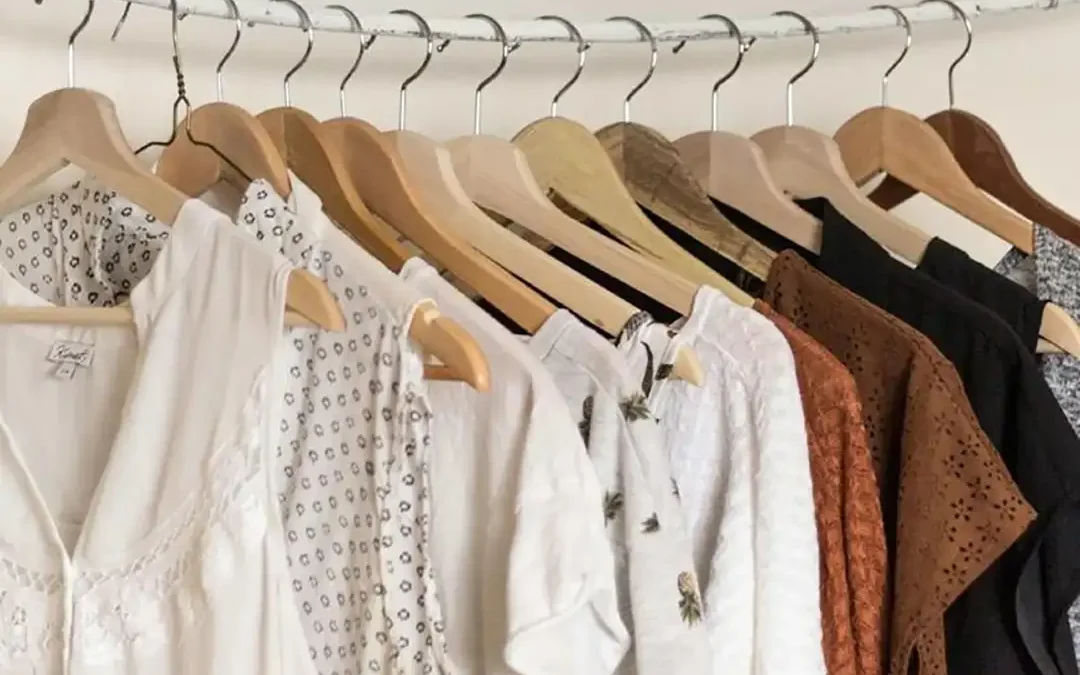
by Admin EunomiaNZ | 8 Jun 2026 | Disposal, Policy, Policy & Strategy, Recent, Reports, Strategy, Sustainability
New research: Regulated textile product stewardship in Aotearoa could add $602 million to the economy
Imagine a thriving textile and fashion sector in Aotearoa New Zealand where a level playing field exists for all businesses, affordable clothing remains accessible for everyone, and circular economy design practices create more jobs.
New research by Eunomia Regulated Product Stewardship for Textiles in Aotearoa New Zealand, a cost benefit analysis (CBA), that was commissioned by the Textile Advisory Group with funding from Clare Foundation, shows this future is not only possible but economically beneficial. Regulated product stewardship (RPS) is the foundation of a resilient, fair and thriving textile industry in Aotearoa New Zealand, says Textile Advisory Group spokesperson Bernadette Casey. “RPS supports a stable textile industry in Aotearoa New Zealand and this is especially important in times of uncertainty” Casey says. “We now have research that shows the economics of RPS not only stack up but could bring significant benefits to Aotearoa New Zealand.”
The report outlines two regulated product stewardship pathways, a modest and a high‑ambition option. It estimates a net benefit of $98m over ten years under the modest scenario, increasing to $602m under the more ambitious approach. Both options would also deliver significant environmental and social benefits for the sector and Aotearoa New Zealand.
RPS for textiles would generate funding for research and circular design, infrastructure and systems for reuse and recycling, and consumer education campaigns. A high ambition scheme would go further with kerbside textile collection, digital product passports, and would result in significantly higher reuse and recycling.
Key findings include:
● A $98 million net benefit under the modest RPS scenario and a $602 million net benefit for the high ambition scenario.
● Employment could grow by up to 6% by 2038. With opportunities across repair, reuse, recycling, research and innovation, and consumer engagement.
● Currently, 78% of textiles end up in landfill (107,000 tonnes/year), with just 6% reused or recycled in New Zealand.
● Under a high ambition RPS scheme, landfill could fall to just 4% by 2038, with a 23% reduction in consumption, and 86% of what is bought, reused or recycled.
● For regular (mid-price) fashion items, price would increase by 1.8% on a modest ambition scenario and 2.9% for high ambition RPS.
● For super fast-fashion, the retail price would increase 7% and 11% under the different scenarios (for a $25 top this would be a $1.80 or $2.90 increase respectively). Properly funded reuse (e.g. hire/lease) and repair initiatives, meanwhile, would improve access to good quality clothing.
● Carbon emissions could be reduced by up to 10.8 million tonnes by 2038, with carbon reduction benefits valued at $900 million under the low ambition scenario and $1.6 billion under the high ambition.
A well‑designed RPS would introduce compliance and funding obligations for producers, with most costs falling on low‑quality imports. However, the research shows the overall benefits outweigh these costs by reducing pressure on local councils’ waste systems, increasing the value of recycled materials, and creating new revenue streams for New Zealand businesses.
Eco‑modulated incentives are a key part of RPS and reward producers for improving durability, repairability and recyclability. Incentivising better product design encourages investment in durable and repairable textiles, as well as in reuse.
Consumers, while potentially paying a little more up front, would benefit from higher quality products that deliver better value for money over time.
RPS is the foundation for a strong local textile industry where businesses compete on quality rather than volume; and responsible production supports investment in innovation, textile recycling and circular business models, resulting in increased value for all.
Find the report here.
by Admin EunomiaNZ | 3 Jun 2025 | article, Plastics, Reports, Sustainability, Sustainable Business, Waste & Recycling
In May 2025, Parliamentary Commissioner for the Environment (PCE) published the research note ‘Resource use and waste generation in Aotearoa New Zealand: filling (some) gaps’ to contribute to the investigation they’re carrying out on the impacts economic production and consumption impart on the environment. The investigation seeks to gather information about whether continued population and economic growth can be sustainable with finite natural resources and absorptive capacity for waste and pollutants. The research note summarises five pieces of external research commissioned by PCE to fill in data gaps identified in their literature review that centred around resource use and waste generation in New Zealand.
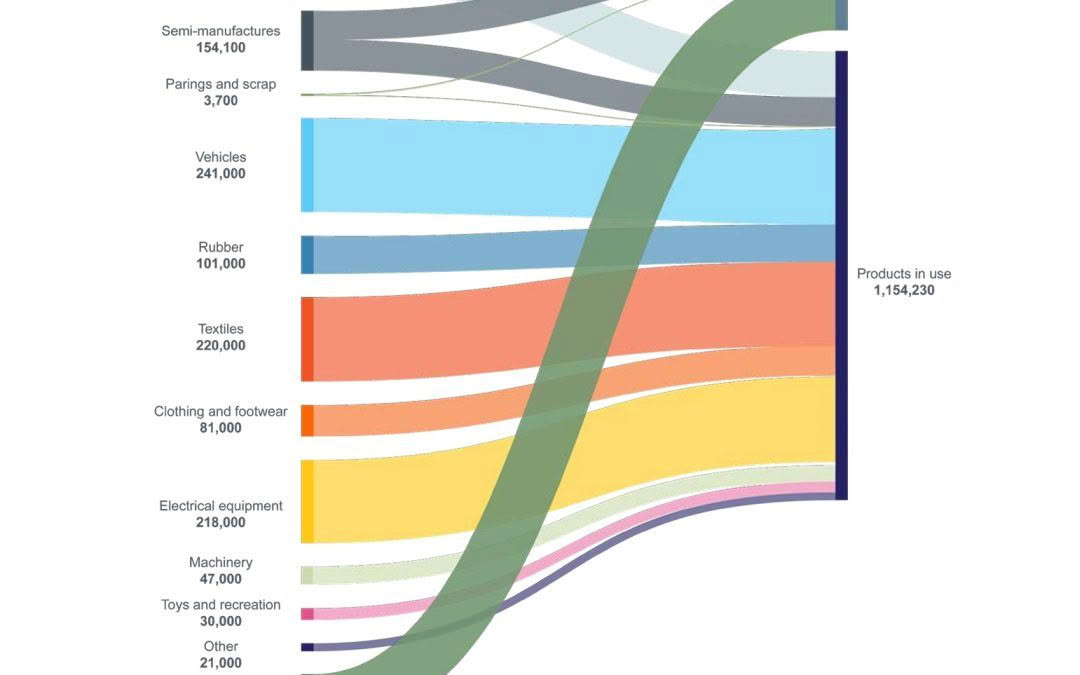
One of the external research pieces, ‘The plastic content of manufactured imports’ was undertaken by Eunomia Research & Consulting alongside Whirika Consulting. This research focussed on quantifying New Zealand’s plastic problem and mapping the flows of plastic. Two key findings identified in the research note are outlined below:
Key finding #1: There is far more plastic in complex products than in packaging.
Key finding #2: The largest components of New Zealand’s plastic use – vehicles and textiles – are also key sources of microplastics.
Click here to find out more about PCE’s investigation into resource use and waste generation, and to read a summary of our report on page 48.
“Measuring the amount and types of plastic we use and discard is a prerequisite for appropriate management and monitoring – it is a vital step in allowing us to make evidence-informed decisions around where we direct resources to improve our use and management of plastic, and to track their effectiveness.” – Professor Dame Juliet Gerrard (previous Prime Minister’s Chief Science Advisor)
by Duncan Wilson | 14 Nov 2018 | article, Councils, Policy & Strategy, Presentation, Recycling, Reports, Waste & Recycling
Director Duncan Wilson presented on the Impact of China National Sword at this year’s WasteMINZ conference in Christchurch. The analysis concluded that, while the impact has been major so far, we are probably still only at the beginning of the changes that we will see. Recent data highlights the fact that New Zealand’s relies heavily on a small number of countries to take our material. If these countries further restrict the material they accept it could lead to real issues for what we do with our recyclables. A range of actions are likely to be necessary to secure the future of the industry.
To view the presentation click the download button below:
Download
The Ministry for the Environment has also released our report on the impact of China National Sword in NZ.
You can download a copy of the report by clicking the button below:
Download
by Duncan Wilson | 31 May 2018 | article, Councils, News, Policy & Strategy, Recycling, Reports, Waste, Waste & Recycling
The discussion document Rebooting Recycling – What can Aotearoa do? has been released by WasteMINZ. Eunomia worked with WasteMINZ and the recycling industry to develop the document.
Overview:
The collapse in international recycling markets has left the recycling sector in New Zealand in a vulnerable position. Without positive action to address the issue, recyclable material could be sent to landfill, councils and communities will suffer financially, and operators could go out of business. Action from the Government is needed. There are some things that need to happen immediately, including:
– enabling access to funding,
– facilitating national communications, and
– obtaining better data on recyclable materials.
There are also some things that will take longer, but that will help build a more robust system and deliver a more circular economy. These actions include:
– revising the national waste strategy,
– changes to the waste disposal levy,
– product stewardship and design,
– ongoing communications, and
– positive public procurement of recycled products.
While there is a lot to do, everything that has been set out in this discussion paper can be achieved using existing funding sources and legislation. The sector is engaged and willing to work positively with the Government to ensure our sector is thriving.
Finally, this crisis also represents an opportunity, the opportunity to build a new system that can deliver better outcomes for our communities, our environment, and our economy. Together we can reboot recycling and create a circular economy for Aotearoa.
To download a copy of the discussion document click the button below:
Download
by Duncan Wilson | 2 May 2018 | article, Councils, Recent, Recycling, Reports, Strategy, Waste
In this article from Revolve magazine Duncan Wilson looks at the past and future of waste planning in New Zealand.
The way we manage waste has evolved significantly over the last 30 years. Unfortunately not a lot of credit for that can go to our waste planning. If we are going to meet the challenges of the next 30 years we are going to need to think differently. We are going to need to do things differently. Our waste plans need to be about more than just when and what bins get collected. They need to be about how we make our communities better.
To download the article click the download button below:
Download
by Duncan Wilson | 22 Jan 2018 | Councils, News, Policy, Recent, Recycling, Strategy, Waste
Eunomia worked with the WasteMINZ TA Forum to update the Local Government Waste Manifesto that we originally helped create in 2018. Since the first Manifesto was produced there have been a range of significant changes in the sector. These include the impacts of China’s ‘National Sword’ policy, the ongoing impacts of Covid 19 and the global economic recession, and a growing awareness around the need to tackle plastic pollution.
The updated Manifesto was released on 4 August 2020. It sets out a number of additional actions for Government that will enable real reductions in waste to landfill and reduce the costs borne by councils and their communities. Together with the original 5 actions, the key elements are:
- Review the New Zealand Waste Strategy to set a clear programme for action
- Expand the Waste Disposal Levy and progressively raise the levy to reduce waste to landfill
- Officially adopt the National Waste Data Framework to enable better planning and monitoring
- Introduce a Container Deposit Scheme to lift recycling rates and reduce litter and marine pollution
- Implement mandatory or co-designed product stewardship schemes for tyres, e-waste and, agrichemicals, and farm plastics
- Invest in onshore and local infrastructure for processing recovered materials
- Standardise household rubbish and recycling collection systems
- Take action on plastics and packaging to reduce pollution and make sure all packaging used or made in NZ can be re-used or recycled
To download a copy of the updated Manifesto click the download button below:
Download
To download a copy of the orignial Manifesto click the download button below:
Download
by Duncan Wilson | 2 Aug 2017 | article, News, Policy, Recent, Reports, Waste
Duncan Wilson is featured in the August issue of Local Government magazine, talking about the recent Eunomia report on New Zealand’s waste levy. Click the button below to download a copy of the article.
Download
by Duncan Wilson | 31 Jul 2017 | Reports, Waste
Eunomia has constructed this handy downloadable calculator to help landfill owners assess the potential financial impact of applying for a waste composition or capture and destruction Unique Emissions Factor (UEF).
The file runs in excel and requires version 2003 or more recent. You will also need to enable macros for it to run. If you have any questions or feedback please get in touch at info@eunomia.co.nz
Download
For more information on Unique Emissions Factors for waste see: Guide to Landfill Methane in the ETS
by Duncan Wilson | 23 Jul 2017 | News, Policy, Recent, Uncategorized, Waste
Our waste levy research report has generated a lot of interest. Here are some links to media articles:
http://www.radionz.co.nz/national/programmes/ninetonoon/audio/201849672/take-make-dispose-calls-for-landfill-levy-hike
http://www.stuff.co.nz/dominion-post/news/national/94816836/Reluctance-to-charge-more-people-dumping-fees-blamed-for-rise-in-landfill-waste
http://wellington.govt.nz/your-council/news/2017/07/waste-levy
http://www.scoop.co.nz/stories/PO1707/S00018/waste-disposal-levy-could-create-9000-jobs.htm
https://m.newsie.co.nz/news/42399-higher-levy-would-cut-waste-and-create-work.html
http://www.recyclingwasteworld.co.uk/news/new-zealand-could-increase-its-gva-by-287m-by-restructuring-its-waste-disposal-levy-says-eunomia-report/157045/
http://www.recyclingwasteworld.co.uk/news/new-zealand-could-increase-its-gva-by-287m-by-restructuring-its-waste-disposal-levy-says-eunomia-report/157045/
http://www.nzherald.co.nz/wanganui-chronicle/midweek/news/article.cfm?c_id=1503658&objectid=11885818
https://t.co/WsgHHqrwWP
https://twitter.com/hashtag/NZWasteLevy?src=hash
by Duncan Wilson | 2 Jul 2017 | News, Organic, Policy, Recent, Recycling, Reports, Strategy, Sustainability, Waste
Eunomia Research & Consulting undertook research to improve understanding of the impacts of possible changes to the structure and rate of the Waste Disposal Levy.
The study, which was commissioned by a consortium of businesses and councils, showed that there are likely to be real benefits for NZ through putting in place a well-structured levy regime. The research found there would be significant benefits in terms of waste minimisation, employment, and the economy. Key features should include:
- Extending the levy to all types of fills
- A large increase in the rate of the levy
- A differential between ‘active’ waste and ‘inert’ waste
- An escalation to the target rates over time
- Increased monitoring and enforcement, and
- Targeted spending of levy income.
Download the summary report
Download
Download the full report
Download
by mmwd | 12 Apr 2017 | Recent, Recycling, Reports
In this report, prepared jointly with Resource Media, we analyse recycling data from around the world to understand which countries really lead the municipal waste recycling league table.
Some eye-catching headline recycling rates are reported in the media, but the basis on which rates are calculated can vary considerably. In some cases, a great deal of commercial or construction waste is counted, while approaches to accounting for rejects and for intermediate processes like MBT vary considerably. Even within the UK, the four nations now report their recycling on different bases, with Defra producing an annual set of figures that allow the results to be compared on an equal footing.
Both the OECD and the European Commission produce annual municipal waste and recycling statistics, which eliminate some (but far from all) of the inconsistencies. However, there are a few high recyclers that are members of neither organisation – Singapore and Taiwan, for example, report recycling rates above 55%. Bringing these data together allow us to present a world league table of reported recycling rates, which shows Germany as the world leader on 66%.
This is only the start of the story, though, as these figures don’t really compare like with like. Taking account of the different ways of counting, Germany remains in top spot, but is less than two percentage points ahead of Taiwan, which rises to second place, while Wales is in third.
The report also shows the rapid progress that Wales is making, and that the coutry is rapidly closing in on Germany’s established place at the top of the chart.
This report is available free of charge. Press the silver button and supply a few details about yourself in order to access the download.
Download
by Duncan Wilson | 30 Oct 2015 | Councils, Presentation, Waste
WMINZ – The Horror of 240L Wheelie Bins
What is so Horrible Anyway..? 15 years of observations − Waste Not have been going through bins and bags of rubbish for a looonnng time now − A few things become obvious after a while − Let’s have a look…
Download pdf
